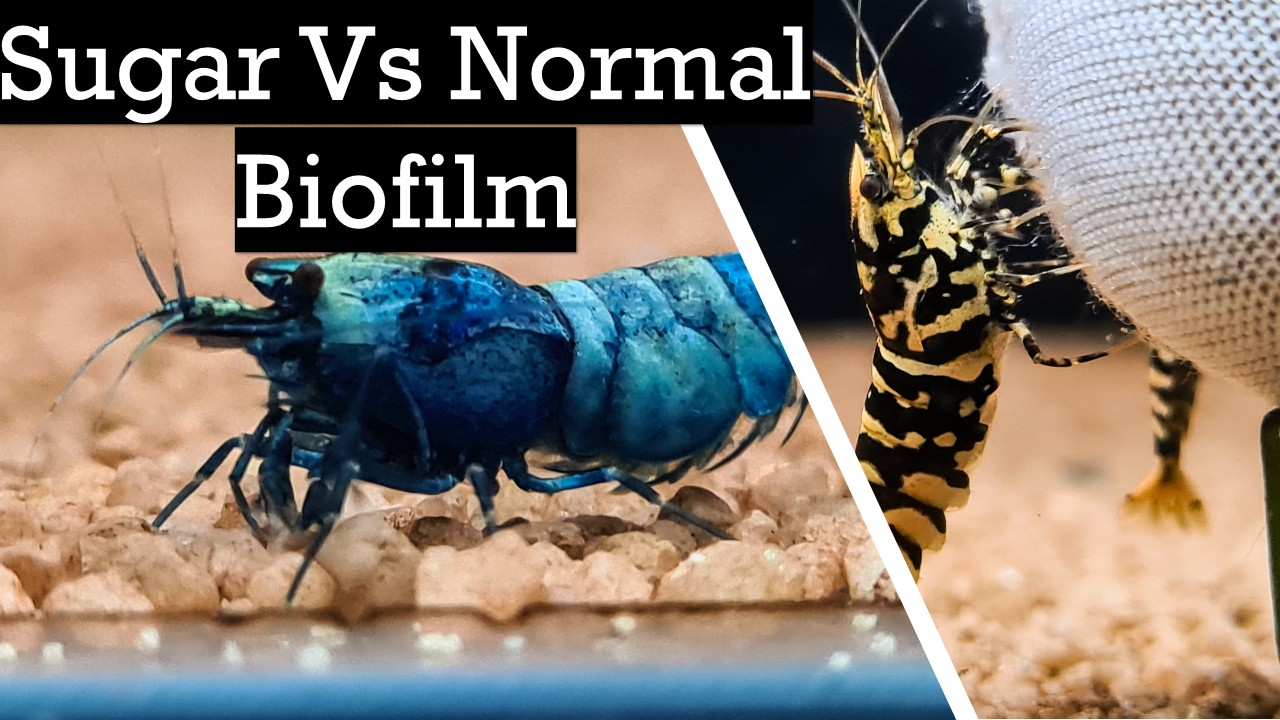
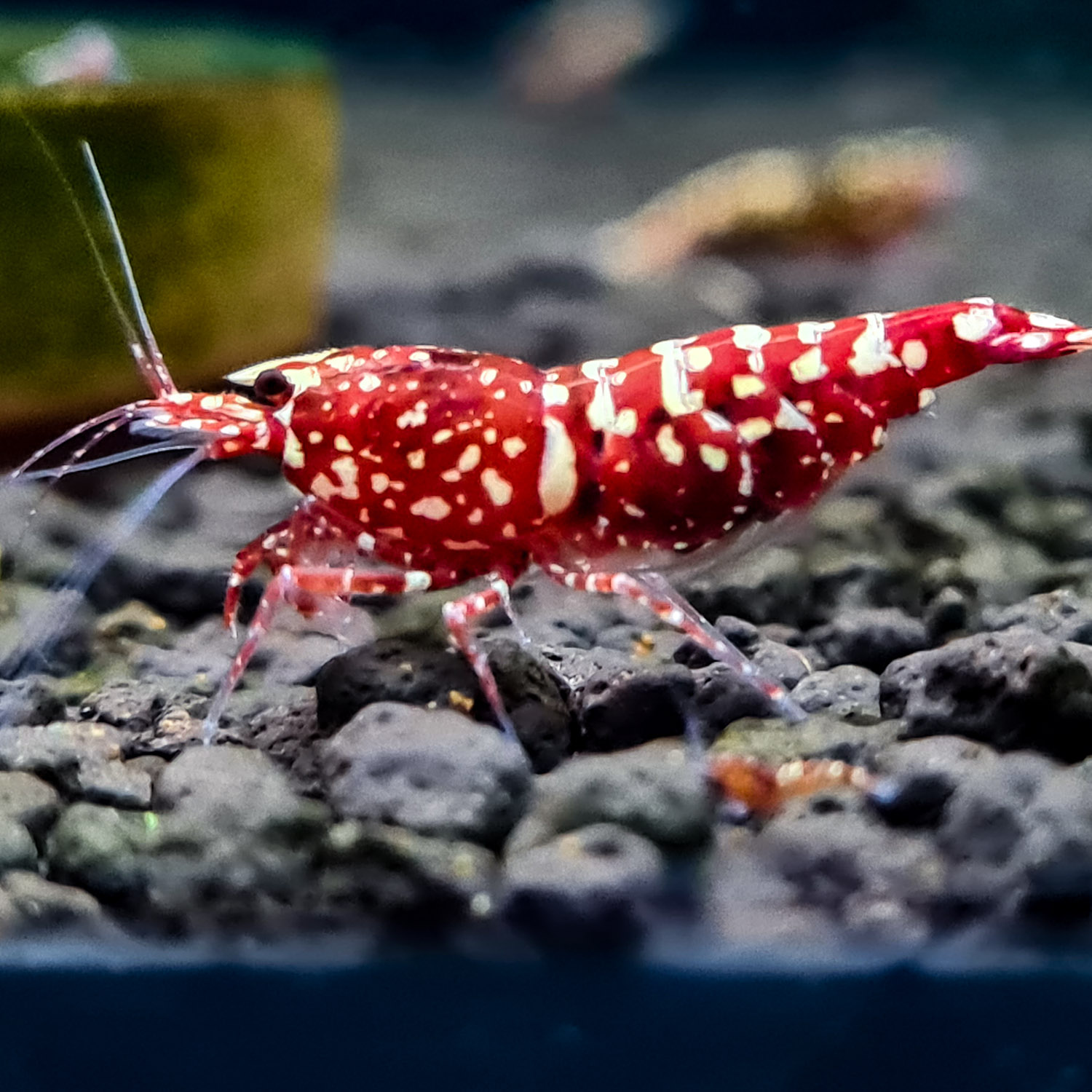
To put this idea to the test, Rocco, an independent hobbyist based in the United States, carried out a methodical experiment on biofilm development. He set out to compare how sugar influenced the growth of biofilm across different natural food sources—banana leaves, mulberry, and catappa leaves. Due to a shortage of catappa, his focus narrowed to banana and mulberry, but the results were strikingly consistent. The findings left little doubt.
For clarity, Rocco categorized his leaves into normal biofilm leaves and sugar-enhanced leaves, the latter referred to as “sugar biofilm leaves.”
Methodology: Precision and Care
Rocco’s process was meticulous. He used RO water in clean buckets, adjusted TDS to approximately 175 using Salty Shrimp minerals, and added 1/16th teaspoon of Bacter AE per 3 gallons. For sugar biofilm leaves, he included 1.5 teaspoons of organic sugar. Each bucket was aerated to maintain oxygen, and leaves were stirred once daily over four days.
After four days, the contrast between sugar biofilm leaves and normal biofilm leaves was striking and unmistakable. The sugar biofilm leaves—both banana and mulberry—were coated in a thick, slippery layer that easily broke apart when handled. On the mulberry leaves, this dense coating even coincided with the early stages of leaf decay, showing that the rapid microbial growth was not entirely healthy or balanced. In contrast, the normal biofilm leaves told a very different story. Banana leaves developed only a very light, almost imperceptible layer of biofilm that you could barely feel with your fingertips, while mulberry leaves grew a moderate, steady layer of biofilm—thinner than the sugar-coated ones, but firm, well-structured, and more representative of a naturally balanced microbial community.
This clear distinction is crucial: sugar-fed biofilm may look abundant and impressive, but it is unstable and artificially accelerated, whereas naturally developed biofilm may appear modest but offers a robust, nutritious foundation. Understanding this difference sets the stage for the next and perhaps most revealing observation—shrimp behavior when presented with both types of leaves.
Shrimp Behavior: Instincts Speak
The most revealing part of Rocco’s experiment came when both leaf types were placed side by side in the shrimp tanks. And here’s the thing—this was Rocco’s independent test, conducted meticulously and without any influence from me. I’m simply sharing his observations, not steering the shrimp or the results.
Rocco approached it like a true scientist: checking each tank at 30 minutes, then again at 60 minutes, carefully noting every shrimp movement, every grazing pattern. The shrimp had a real choice—no forced feeding, no sugar-only bias—which made the results far more meaningful.
Rocco expected the shrimp to explore and graze on all the leaves, assuming that any biofilm—even sugar-fed—would attract them. What he observed, however, was far more striking: across every single aquarium, shrimp consistently chose the natural biofilm leaves over the sugar-coated ones. In some tanks, sugar biofilm leaves were completely ignored—or had only a solitary shrimp nibbling—while just inches away, multiple shrimp grazed eagerly on the natural leaves, returning again and again. Time and again, the shrimp ignored the sugar-coated leaves, sometimes not touching them at all, revealing a remarkable instinct: they could discern quality, selecting the nutritious, balanced biofilm over flashy, artificially accelerated growth. The result was as clear as it was astonishing—a vivid, real-world demonstration that shortcuts might look impressive, but they simply cannot replace the depth, balance, and life-sustaining value of naturally developed biofilm.
It was almost as if the shrimp were saying, “We know what’s good for us.” Their behavior revealed a deep truth: shrimp are not fooled by flashy, fast-growing biofilm. They instinctively choose quality over quantity, substance over show, reinforcing a key lesson in shrimp keeping: shortcuts like sugar-fed biofilm might look impressive, but they don’t provide the long-term nutrition and stability that natural biofilm does.
The Science Behind Sugar-Fueled Biofilm
The shrimp’s clear preference for natural biofilm aligns perfectly with what science tells us about sugar-fed biofilm. While sugar additives like glucose or sucrose can accelerate microbial growth, this growth is often dominated by a narrow group of fast-growing bacteria. These sugar-loving microbes proliferate quickly, giving the appearance of abundant biofilm—but in reality, they outcompete beneficial microbes such as algae, protozoa, and fungi, which are essential for balanced nutrition and a stable tank ecosystem.
Imagine surviving on nothing but candy and instant meals—you might get by for a while, but eventually, your health falters. That’s exactly what sugar-fed biofilm does. It creates a fleeting illusion of abundance, but under the surface, essential nutrients are missing. Shrimp may nibble, but over time, their growth, molting, and reproduction are subtly compromised. The science confirms what we saw with our own eyes: quick growth isn’t always good growth
Two key studies highlight this:
- “Availability of Glucose and Light Modulates the Structure and Function of a Microbial Biofilm” – This research showed that glucose changes biofilm composition, favoring sugar-hungry bacteria at the expense of microbial diversity, producing thinner, weaker biofilm.

- “Sucrose Addition Directionally Enhances Bacterial Community Convergence and Network Stability of the Shrimp Culture System” –

While sucrose accelerates bacterial growth, it suppresses beneficial microbes, destabilizing biofilm over time.
From these findings, the risks of relying on sugar-fed biofilm become obvious: reduced microbial diversity, weaker structure, lower nutritional content, and higher potential for opportunistic pathogens. Just like a human surviving on junk food, the shrimp may scrape by, but the ecosystem—and their health—suffers in subtle, long-term ways.
Rocco’s observations make these scientific insights tangible. When shrimp consistently ignored sugar biofilm, it wasn’t random—it was instinctive. Like a person instinctively craving whole, nourishing food over empty calories, shrimp gravitate toward biofilm that truly supports their growth and well-being. True biofilm quality, like good nutrition, can’t be faked by quick fixes or superficial abundance.
From these findings, sugar-fed biofilm poses risks: reduced microbial diversity, less structural stability, higher pathogen potential, and lower nutritional value.
Shrimp Grazing Preference

In this picture, you can see the sugar coated banana leaf, and right normal banana leaves. The results are clear. 
And in this picture, the same test is done with a different type of shrimp. On the left the sugar biofilm leaf and on the right normal way of cultivating biofilm. The sugar fed leaves changed to a lighter shade, whereas the normal method retain its colors. Also the shrimps are seen gravitating towards the better choice.
This is the same test using mulberry leaves, left is with sugar biofilm and right normal.


Rocco also ran another side-by-side observation to highlight shrimp and snail preference. On the left was a sugar biofilm leaf, in the middle a Kallax Ball, and on the right a normal biofilm leaf. The results were striking: both the Kallax Ball and the naturally developed biofilm leaf attracted active shrimp and snails, while the sugar biofilm leaf remained largely ignored.
This wasn’t a detour from the main experiment—it was a validation. A quiet reminder that when we work with nature, rather than trying to rush her, the results speak for themselves. Shrimp and snails instinctively gravitate to the naturally grown biofilm and the Kallax Ball, almost like a seal of approval. It’s proof that patience, careful observation, and respect for natural processes create thriving, resilient ecosystems that shortcuts can never replicate. When we allow biofilm to develop naturally, whether on leaves or supported by tools like the Kallax Ball, it produces a rich, balanced ecosystem that shrimp instinctively recognize as valuable nutrition. Sugar shortcuts might look productive, but shrimp—and the health of the tank—tell a different story.
Practical Lessons from Shrimp Behavior
Rocco’s observations underline a critical lesson: shrimp behavior is a reliable indicator of biofilm quality. Rapid, sugar-driven growth may appear impressive, but natural, patient cultivation provides both superior nutrition and ecological stability. Encouraging biofilm with leaves, botanicals, light, and tools like the Kallax Ball produces a resilient, thriving ecosystem.
The Bread Dough Analogy
Think of biofilm development like bread dough rising. Adding sugar excessively is like over-yeasting: it rises quickly, looks impressive, but collapses under its own instability. Natural growth, aided by the Kallax Ball, is akin to allowing dough to rise steadily, forming a strong, resilient structure. The result is a nourishing, sustainable environment that supports long-term shrimp health and tank balance.
Microbial Diversity and Shrimp Health
Biofilm is more than thickness—it is defined by microbial diversity. Naturally grown biofilm provides bacteria, algae, protozoa, and fungi in balance, supplying essential nutrients, trace elements, and enzymes vital for shrimp growth, molting, and reproduction. Sugar-fed biofilm, while thick, lacks these components, leading shrimp to instinctively avoid it. This underscores the importance of fostering natural microbial communities.
Here’s a concise chart summarizing the main unseen risks of feeding shrimp tanks with sugar-cultivated biofilm grown outside the aquarium:

Advanced Observations: Longevity of Sugar Biofilm
Rocco also examined sugar biofilm longevity in non-sugar environments. Banana and mulberry sugar leaves were submerged in jars of aquarium water for five days. Surprisingly, the biofilm remained mostly intact, indicating that sugar alone does not guarantee rapid consumption or dynamic turnover. This suggests that sugar-driven biofilm can appear abundant but lacks natural adaptability and balance, emphasizing that rapid growth is not synonymous with quality.
This chart shows that while sugar-fed “flash food” biofilm can give a quick surface boost, it lags behind naturally developed biofilm in every key area—especially in microbial diversity, ecological stability, and long-term benefits

Storytelling Through Observations
The narrative from Rocco’s experiment paints a vivid picture: shrimp instinctively choose natural biofilm over artificially enhanced options. This real-world evidence reinforces the science: microbial diversity, stability, and balance are critical for tank health. Hobbyists observing shrimp behavior gain actionable insights, allowing them to replicate successful strategies in their own aquariums.
Practical Lessons for Hobbyists in Story Form
Shrimp behavior provides daily guidance for hobbyists. When shrimp ignore sugar-fueled biofilm in favor of natural leaves, it is a clear signal to trust their instincts. The most effective biofilm is not merely thick; it is balanced, stable, and diverse.
Conclusion: Thriving Shrimp Ecosystems Through Patience and Science
At the heart of it, Rocco’s experiment wasn’t just about leaves, sugar, or biofilm—it was about perspective. It reminded us that what looks impressive in the short term doesn’t always stand the test of time. In the quiet language of shrimp behavior, we saw the truth: they chose depth over speed, balance over excess, and nature over shortcuts. That lesson isn’t only for our tanks—it’s for us, too.
Shrimp keeping is more than just a hobby; it’s a practice in patience, observation, and trust. Every slow layer of biofilm, every steady colony of microbes, every gentle grazing shrimp teaches us that resilience comes from allowing nature to do what she does best. We don’t need to force her—we need only to create the right conditions and then trust the process.
This is why tools like the Kallax Ball resonate so deeply within the community. It isn’t about being flashy or gimmicky. It’s about creating something that aligns with this timeless truth—that the best results come from harmony, not haste. It’s no accident that thousands of hobbyists around the world now trust it to cultivate strong, enduring biofilm that supports thriving colonies. It’s a reminder that when we walk alongside nature, not against her, we set the stage for something greater than ourselves.
So the next time you see biofilm forming in your tank, don’t just see a slimy layer. See the foundation of life, the quiet architect of balance, and the gift that patience brings. And remember: in shrimp keeping, as in life, the real treasures are never built overnight. They are nurtured slowly, lovingly, and with respect for the natural rhythms that sustain us all.